Human Factors
A curated anthology of the best moments on this topic — drawn from across the full video library, ranked by editorial relevance, with direct links to the exact timestamp in every source session.

Two nearly identical accidents a year apart reveal that cockpit automation can quietly corrupt a pilot's instincts — making it possible to understand a danger in theory while failing to recognize it in practice.
Watch full session ↗Flawed Mental Model, Not Ignorance, Drove Thai Airways Crew Toward StallWhat makes this particularly significant is that the captain of Thai Airways Flight 261 understood the physics of the pitch-up moment perfectly — he had disconnected the autopilot himself seconds earlier. What he had failed to account for was how differently the aircraft would be
Auto-Throttle Left Engaged on Third Go-Around Set Fatal Pitch-Up in MotionThe pivotal technical failure aboard Thai Airways Flight 261 came down to a single omission: the captain disconnected the autopilot for the third go-around but left the auto-throttle engaged. On the previous attempt, the autopilot had absorbed the resulting pitch surge automatica
Stall Warning Triggered 19 Seconds Into Go-Around as Captain Pulled Back Instead of Pushing ForwardNineteen seconds after the go-around switches were pressed, the stick shaker activated and a loud cricket alarm filled the cockpit of Flight 261 — the aircraft hanging nearly motionless, nose pointed sharply skyward. The correct response, drilled into pilots through repeated trai
Pitch Reached Nearly 60 Degrees as Flight 261 Entered Unrecoverable Stall at 1,880 FeetThe captain's sustained pull on the control column in the seconds after the stall warning transformed a dangerous situation into an unrecoverable one. Pitch climbed rapidly toward 60 degrees as airspeed collapsed below 30 knots, placing the aircraft in a fully developed aerodynam
Two Conflicting Approach Charts for the Same Runway Compounded Risks at Surat ThaniThailand's Department of Aviation and Thai Airways were operating from different approach charts for the same runway at Surat Thani, and the discrepancies between them were operationally significant. The government chart specified a 204-degree inbound course, which would bring an
Insufficient Pitch Input Left Aircraft Climbing Uncontrolled Toward Stall AngleWith the autopilot disconnected and maximum thrust building rapidly, the captain of Flight 261 applied less than the available control authority to arrest the rising nose. Pitch climbed through 25 degrees, then 30, then 40. A brief forward input brought it back to approximately 3

A one-digit arithmetic error nearly brought down a fully loaded Boeing 777. Understanding how it happened matters for every passenger who assumes pre-flight checks catch everything.
Watch full session ↗LATAM Flight 8073 Dragged Its Tail for 723 Metres Before a Relief Captain's Shout Saved ItCleared for takeoff at 13:25, the crew advanced the thrust levers to a setting limited by the erroneously selected assumed temperature, and the engines spooled to just 92.8 percent N1. Thirty-five seconds into the roll, the automated voice called V1 at 145 knots — 30 knots below
Milan Incident Echoes a Pattern of Weight-Entry Errors Across Multiple Aircraft TypesEntering an incorrect takeoff weight is not a novel failure mode. In 2004, an MK Airlines Boeing 747 crashed after a crew member populated the takeoff weight field with data from a previous sector on which the aircraft had been empty. In 2009, an Emirates Airbus A340 overran the
Dropped Digit in Weight Entry Left Boeing 777 100,000 kg Heavier Than CalculatedWhen the training captain looked up the takeoff weight, he most likely dropped a digit in the hundreds column, entering 228.8 metric tons into the performance tool instead of the correct 328 tons. The trainee captain, on only his tenth flight on the Boeing 777 and working under a
Underweight Calculation Produced V-Speeds 30 Knots Too Low — and a Warning No Pilot RecognisedThe 100,000-kilogram shortfall in the entered weight caused the performance tool to select an assumed temperature of 56°C for thrust deration and a flap setting of five degrees — the lowest available — producing V-speeds of 145 knots for V1, 149 for rotation, and 156 for V2, each
Italy's Air Safety Agency Calls for Software Fixes; EASA Sets 2025 Deadline for New AircraftItaly's National Flight Safety Agency, ANSV, concluded that LATAM Airlines' own procedures contained ambiguities — including a failure to mandate explicit cross-checks during performance tool entry — that increased the likelihood of exactly the kind of error the Milan crew made.
Crew Followed Abnormal Procedures, Dumped Fuel, and Returned Safely to MilanOnce airborne, the aircraft's Engine Indication and Crew Alerting System triggered a continuous chime and a tail strike warning, while the flight data recorder captured a loss of pressure in both APU fire extinguisher bottles — damage consistent with the severity of the strike. T

A routine pre-approach checklist takes minutes to complete. Skipping it on Flight 771 started a cascade that killed 103 people.
Watch full session ↗Flight 771 Crew Had Botched the Same Approach Weeks Earlier — and Filed No ReportWhen the Enhanced Ground Proximity Warning System finally called out 'Too low, terrain,' the captain ordered a go-around and the first officer responded correctly, disconnecting the autopilot and advancing the thrust levers. What the investigation later revealed, however, was tha
Afriqiyah Flight 771 Killed 103 of 104 Aboard After Chain of Human Failures on Approach to TripoliAt 04:01:13, Afriqiyah Airways Flight 771 struck the ground 1,200 metres short of Runway 09's threshold at Tripoli, wings level and with the landing gear already retracted, at a speed high enough to destroy the aircraft completely and scatter wreckage across more than 800 metres.
Somatogravic Illusion Caused Flight 771's First Officer to Push Aircraft into Ground During Go-AroundHaving correctly initiated the go-around — advancing thrust, pitching up and calling for flap retraction — the first officer began to succumb to somatogravic illusion, a perceptual trap in which the powerful acceleration of full thrust, combined with an existing nose-high attitud
Both Pilots Gripped by Illusion as Captain Called Air Traffic Control Instead of Recovering AircraftRather than arresting the pitch-down descent, the captain was himself making forward inputs on his sidestick — inputs that mirrored the first officer's closely enough that the Airbus dual-input warning never triggered. Instead of focusing on the aircraft's worsening attitude, he
Skipped Approach Briefing Set Fatal Chain in Motion on Afriqiyah Flight 771The crew of Afriqiyah Airways Flight 771 began their descent toward Runway 09 at Tripoli without conducting the thorough approach briefing that standard operating procedures required. Only when the aircraft was already close to the final approach point did the first officer deliv
Distracted Captain Failed to Notice Flight 771 Crossing Final Beacon Far Below Safe AltitudeAs Flight 771 crossed the Tango Whiskey beacon — the final approach fix — it was already significantly below the minimum crossing altitude of 1,350 feet, a deviation that went undetected by the captain, the first officer, and a relief pilot also present on the flight deck. The ca
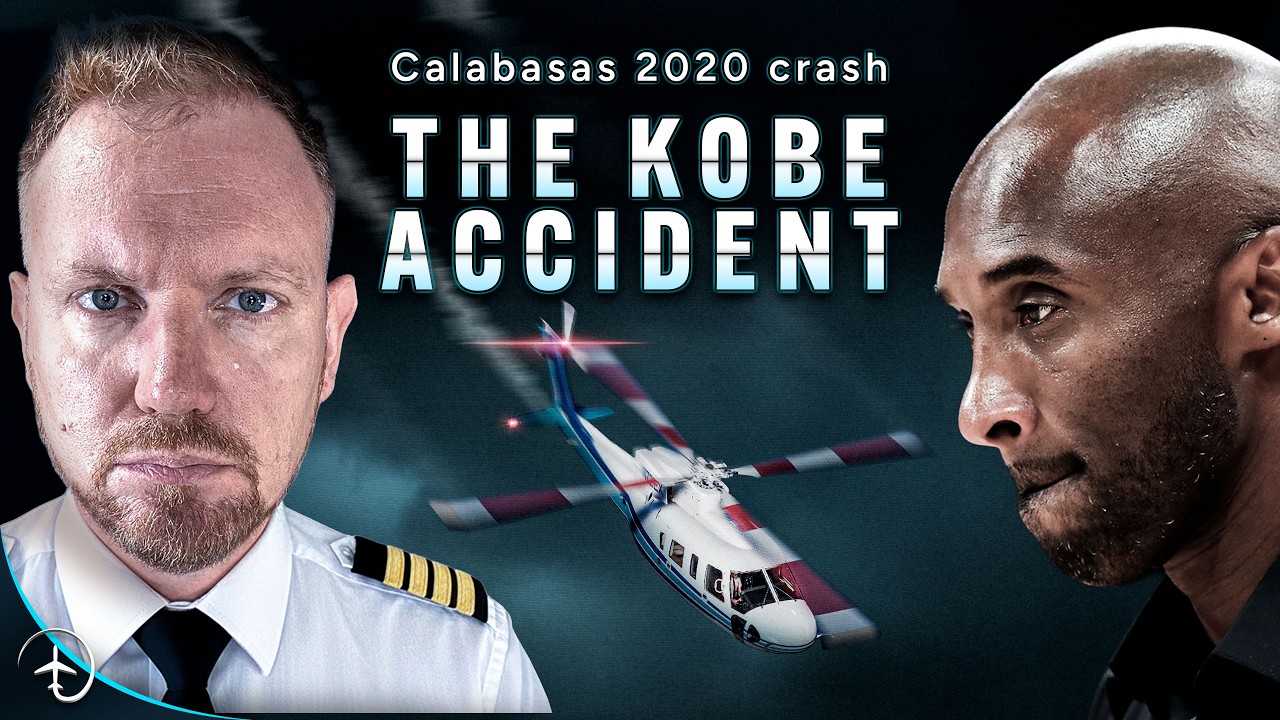
The accident that killed Kobe Bryant may have been set in motion before the helicopter ever left the ground, with a critical gap in weather awareness that investigators could never fully resolve.
Watch full session ↗Radar Data Reconstructs Final Minutes of Bryant Helicopter: Spiral Descent After Vestibular Illusions Overwhelmed PilotWithin two seconds of witnesses watching the helicopter disappear into what one described as a wall of cloud, the pilot called the TRACON controller to report IMC — the precise opposite of what Island Express emergency procedures required. Those procedures mandated that the pilot
Localised Mountain Weather Phenomenon and Excessive Speed Sealed the Helicopter's FateGranted a special VFR clearance at 09:32 and routing north along Interstate 5 before turning west, the helicopter entered the most dangerous leg of the flight at 09:42. Witnesses along US-101 observed it travelling at what investigators confirmed was the standard cruise speed of
Kobe Bryant Crash Pilot Likely Lacked Full Weather Picture Before Fatal FlightOn the morning of January 26, 2020, the pilot of the Sikorsky S-76 carrying Kobe Bryant planned a low-altitude VFR route from Santa Ana north through Burbank and Van Nuys airspace before turning west over the Santa Monica Mountains to Camarillo. A National Weather Service AIRMET
VFR into IMC: The Leading Killer of Private Pilots and Why an Instrument Rating Is No GuaranteeVFR into IMC — a visual flight rules pilot inadvertently entering instrument meteorological conditions — is the single leading cause of fatalities among private pilots worldwide. Studies have measured the average time between entering IMC without instrument preparation and losing
NTSB Rules Out External Pressure in Bryant Crash, Points to Self-Induced Pilot PsychologyThe National Transportation Safety Board found no evidence that anyone — the charter broker, Kobe Bryant, or his staff — pressured the pilot to fly that morning. Island Express pilots had turned down flights more than 150 times over the preceding years, including at least one occ
NTSB Cites Plan Continuation Bias and Systemic Safety Failures in Bryant Crash FindingThe National Transportation Safety Board determined that the accident's probable cause was the pilot's decision to continue VFR flight into deteriorating conditions until he lost all visual references, with plan continuation bias and self-induced pressure identified as contributi

The crew knew bad weather was possible — they just had no idea how bad it had already become. Understanding why reveals a systemic vulnerability that long predated the digital age.
Watch full session ↗First Officer's Thrust Increase During Blackout Triggered Compressor Surge That Destroyed Both EnginesDuring the 36-second blackout, the first officer increased thrust — likely in response to falling engine RPM and the concurrent air traffic control request to climb. The engines were already operating at the edge of the surge line; the additional fuel flow and higher thrust deman
How Idle Thrust Made Flight 242's Engines More Vulnerable to the Storm They Were Descending ThroughWhen the crew of Flight 242 pulled thrust back to idle during their descent through the storm's core, they inadvertently worsened the engines' exposure to water and hail ingestion. At idle, the engine fan spins too slowly to centrifuge water droplets outward into the bypass flow,
36-Second Blackout Aboard Flight 242 Concealed Engines Already Approaching the Surge LineAs water ingestion drove turbine rotation speeds below the threshold needed to sustain the aircraft's generators, Flight 242 lost all normal electrical power for 36 seconds. The cockpit went dark, the cabin lights failed, and critically, the cockpit voice recorder went offline —
Flight 242's Weather Radar Could Not Distinguish Storm Cores from Clear Air, Investigation FoundThe DC-9 operated by Southern Airways carried a Bendix RDR-1E weather radar, a black-and-white display that showed precipitation as white static and required pilots to switch to a special contour mode to gauge storm intensity. In that mode, the most severe precipitation appeared
Southern Airways 242 Crashes on Georgia Highway, Killing 72 — Including Both PilotsAt 18:18 on April 4, 1977, Southern Airways Flight 242 struck trees, utility poles, and power lines as it attempted to land on Georgia State Route 92. The nose collided with a service station, killing motorists who had stopped for fuel, and the fuselage broke into five sections,
Broken Fax Machine and Unsubscribed Warning Service Left Southern Airways Crew Without Real-Time RadarSouthern Airways had not subscribed to the RAWARC real-time weather alert system, and on the day of the accident, the fax machine at the Huntsville station that received the Weather Bureau's radar printouts was out of service. Nine minutes before departure, a dispatcher called th

A routine radio exchange that took seconds to complete would take 160 lives — and the misunderstanding was never caught by either side.
Watch full session ↗Forgotten Speed Brakes Robbed Flight 965 of the Climb Performance That Might Have Cleared the RidgeAt 21:41:15, the ground proximity warning system triggered its automated 'Terrain, terrain, pull up' alert. Both pilots reacted immediately, the first officer hauling back on the control column while the captain advanced the thrust levers to maximum. But the speed brakes — deploy
A Database Identifier Collision Sent Flight 965 Toward the Wrong Beacon — 132 Miles AwayWhen the captain typed the single-letter identifier for the ROZO non-directional beacon into the CDU, the FMS returned a different beacon entirely: ROMEO, located near Bogotá, 132 nautical miles away. The collision existed because both beacons shared the identifier 'R' and operat
A Four-Second Runway Change Decision Confronted Flight 965's Crew with an Impossible GeometryAt 21:36, the Cali approach controller offered the crew a straight-in approach to Runway 19 — a shortcut that could save several minutes of flying. The crew agreed in approximately four seconds. What that acceptance actually required was a steep, continuous descent from above 20,
FMS Fixation and Attention Tunneling Blinded Flight 965 Crew to the Mountains BelowBy the time Flight 965 was descending through the Andes at more than 2,000 feet per minute with speed brakes still extended, both pilots were absorbed in resolving a navigational debate about TULUA — heads down, arguing with the FMS and with each other, rather than flying the air
Flight 965 Crash Killed 160 of 163 on Board and Reshaped Global Aviation Safety StandardsAmerican Airlines Flight 965 struck the Andes on the night of December 20, 1995, killing 160 of the 163 people on board. Four passengers and a dog survived. The accident became a landmark case in aviation safety education, used worldwide to teach situational awareness, crew resou
Flight 965's FMS 'Direct-To' Command Silently Erased the Waypoints That Could Have Saved the AircraftWhen the captain entered a direct routing to the Cali VOR into the Boeing 757's Flight Management System, the CDU — a small keyboard-and-screen unit near the pilots' knees — instantly and silently deleted every intermediate waypoint from the active flight plan. TULUA and ROZO, th