Original source: flightdeck2sim
This video from flightdeck2sim covered a lot of ground. 14 segments stood out as worth your time. Everything below links directly to the timestamp in the original video.
Every commercial flight begins with this unglamorous checklist — and a single skipped item, like a manual gear extension door left open, can ground an aircraft on rotation.
737 MAX Cold-and-Dark Safety Inspection: A Step-by-Step Cockpit Walkthrough
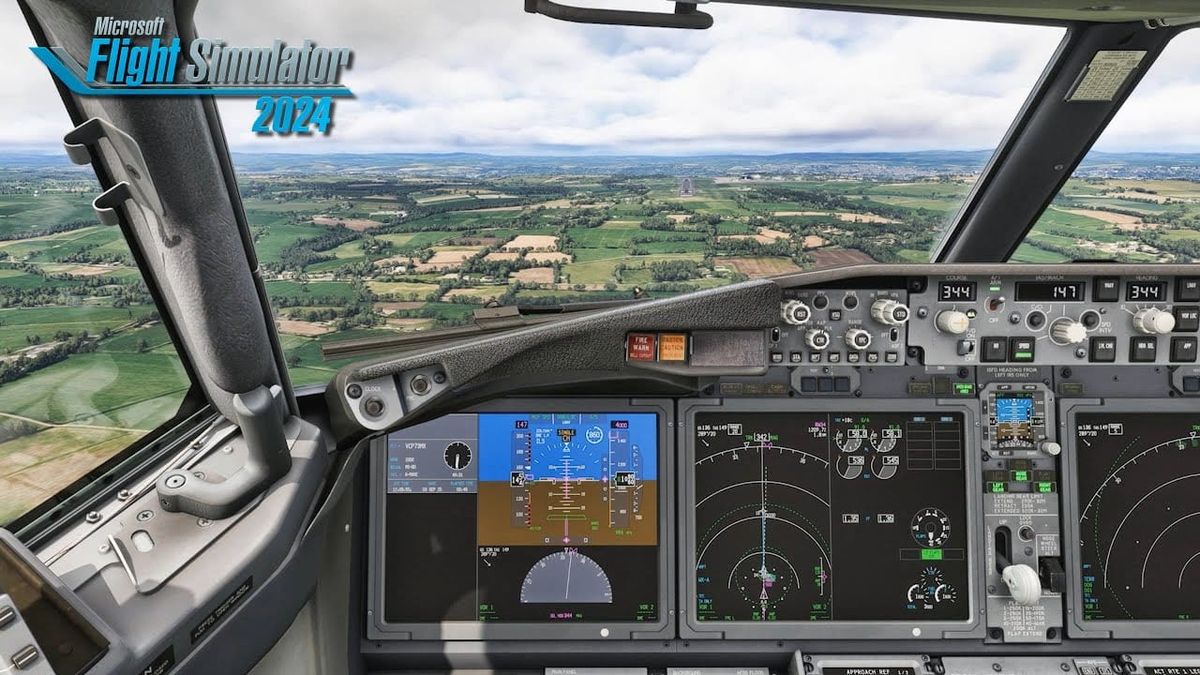
Starting from a completely unpowered cockpit, the safety inspection follows a disciplined sequence before a single passenger boards.
- Power up: Connect battery and external ground power to establish AC power on the bus.
- Hydraulics and gear: Activate electric hydraulic pumps; verify six green landing gear lights.
- Fire tests: Check squibs on the pedestal, then hold the fault test and fire test switches — confirm fire bell, master caution, overheat detector, wheel well, and engine fire lights all illuminate correctly.
- Emergency exits and flaps: Arm emergency exit lights; verify flap position matches the digital indicator; perform takeoff configuration warning horn check.
- Cargo fire test: Hold the test button and confirm fire bell and forward discharge light illuminate with no detector fault.
- Upper overhead panel: Perform stall warning tests one and two independently; test Mach airspeed warning; move flight recorder to test and confirm the off light extinguishes.
- IRS alignment: Set IRS to NAV and confirm the 10-minute alignment countdown on the heading display.
Skipping or rushing any of these checks removes the safety net that catches faults before flight.
"Interesting fact is if that is open, the gear won't retract after takeoff. So we always make sure that's physically closed."
How to Load the 737 MAX FMC: SimBrief Sync, SID/STAR Selection, and Performance Data Entry
The Flight Management Computer can be loaded in minutes by syncing directly with SimBrief rather than entering the route manually.
- Airport and IRS: Enter departure airport (Liverpool), select GPS position, and wait for IRS alignment before the PFD and ND come alive.
- Route load: Go to Route → Flight Plan Request and select Load to import the SimBrief plan automatically.
- Activate and verify: Activate the route, then step through the Legs page to confirm there are no discontinuities.
- SID and STAR: Select the Wally 2 Tango SID for runway 27 and the Tismo 1 Golf STAR for ILS 34 at Cork; execute with no transition.
- Performance init: Enter zero fuel weight (63.6), reserves (2.6), cost index (30), cruise level (FL320), and top-of-climb wind (226° at 30 knots).
- Takeoff performance: Select flap 5, TO 34°; enter CG 20.1 and trim 5.93; input V-speeds 133/139/149 knots from the operational flight plan rather than the FMC wet-speed output; set V2 (149) on the MCP.
With SimBrief integration, the entire route load and performance setup takes under five minutes.
"It saves having to enter all the route manually."
737 MAX Overhead Panel and MCP Pre-flight Configuration Walkthrough
With the FMC loaded, attention shifts to the overhead panel and Mode Control Panel before pushback.
- Flight controls: Confirm yaw damper on; verify flight control and spoiler switches are guarded with no lights illuminated.
- Fuel: No centre tank fuel — wing tank pumps on; open and close the crossfeed valve confirming bright-dim-bright-off cycle.
- Cabin systems: Passenger seat switches on; seat belt sign to Auto to signal cabin ready for pushback; panel lighting adjusted.
- Window heat and anti-ice: Window heat on; anti-ice off for departure; packs to Auto; isolation valve open.
- Pressurisation: Set destination elevation (Cork, 502 ft) to 500 ft on the overhead panel.
- MCP setup: Flight directors on; preset runway heading 266° for runway 27 so the flight director commands heading immediately on TOGA; set clearance altitude 4,000 ft.
- Pedestal: Tune Wallace VOR 114.1 as active for raw-data backup; transponder to standby 2000; confirm rudder trim at zero.
Presetting the runway heading on the MCP before TOGA is a detail that ensures the flight director gives correct guidance from the first second of the takeoff roll.
"We always preset that. That way when you push TOGA, the flight director bar is commanding the runway heading."
Pre-departure Briefings on the 737 MAX: Gross Error Check, Fuel Verification, and SID Step-Through
Before calling for pushback, a structured briefing sequence cross-checks every critical number against an independent source. The gross error check uses the FMC progress page distance (275 nm) against the paper flight plan (278 nm) — within 3 miles confirms the correct route is loaded. Fuel on arrival at Cork reads 3.6 tonnes against reserves of 2.6, with an additional tonne of contingency fuel accounted for.
The takeoff briefing covers runway 27 with wet speeds, flap 5, engine anti-ice not required, and an engine-failure procedure of runway heading to 3,000 ft over the Irish Sea. For the SID verification, setting the navigation display to Plan mode and stepping through the Legs page waypoint by waypoint against the chart — confirming the Wally 2 Tango's 296° inbound radial and 4,000 ft stop altitude — is far more reliable than a visual route check alone.
"As a gross error check, what you can do is go to the progress page and check the ground distance, which is 275. You can see here on the flight plan, it's 278. So within 3 miles, it's a sort of gross error check."
LEAP-1B Engine Start on the 737 MAX: Bowed Rotor Motoring Explained
Starting the LEAP-1B engines fitted to the 737 MAX involves one step that the older CFM56-powered NG does not require: Bowed Rotor Motoring (BRM). When an engine has been sitting hot, the rotor shaft can bow slightly under thermal stress. BRM motors the shaft before the start sequence to straighten it, preventing vibration or damage on light-off.
In practice: move the start switch to GRD, confirm N2 and oil pressure rising, then wait for the BRM motoring display to extinguish before advancing the switch to IDLE at 25% N2. Monitor EGT against the start-limit bug, targeting approximately 500°C, N1 around 20%, and N2 stabilising at 70%. On the first start of the day, BRM completes quickly. The full sequence then repeats for engine one.
"BRM is basically designed to straighten the rotor shaft, which bows due to thermal buildup after engine start."
737 MAX Takeoff Roll: Spool-Up Technique, TOGA Thrust, and Rotation Rate
A precise takeoff roll on the 737 MAX follows a specific thrust sequence rather than simply pushing to full power.
- Line up: Overshoot the centreline slightly during the turn-on to avoid using unnecessary runway length; straighten with right rudder only — no differential braking.
- Spool up: Advance thrust levers to 40% and pause to let both engines stabilise before releasing brakes.
- TOGA: Press the TOGA button (assignable to a joystick) to command takeoff thrust, targeting 87.5% N1; apply light forward pressure on the control column.
- 80 knots: Release forward pressure; switch to rudder only for centreline tracking; apply slight left aileron into the crosswind.
- Rotate: At rotation speed, pull at 2 to 2.5 degrees per second, adjusting back pressure continuously to keep the rotation rate on the flight director; avoid the natural tendency to let the rate fall in the control column's dead band.
- Gear up: Call positive climb, select gear up, and trim as required.
The 40% spool-up pause is the detail most simulator pilots omit — it ensures symmetrical thrust before the roll begins.
"About 2 to 2 and a half degrees per second. Adjust the back pressure as required."
737 MAX Cruise-to-Approach Setup: ILS Frequencies, Minimums, and Descent Planning for Cork
On a short sector, the crew begins approach preparation the moment they level at cruise altitude — in this case FL320 with the top of descent only 60 miles ahead. After confirming LNAV/VNAV engagement and setting max continuous thrust as a low-speed safeguard, the pilot loads descent winds via SimBrief and Navigraph to give VNAV the most accurate profile.
The approach setup for Cork ILS runway 34 requires: ILS frequency 109.15 set active on the pedestal; missed-approach Cork VOR 114.6 on standby; final approach course 344° set on both captain's and first officer's MCP cursors; and category C minimums of 661 ft set to baro. A quick situational-awareness fix — multiplying FL320 by 3 gives 96 miles, which is placed as a range ring on the fix page and aligns almost exactly with the computed top of descent.
"Take 32, times that by three to give you a rough idea of when you're going to start descent. So that's going to be 96."
737 MAX Approach Briefing: STAR Step-Through, Speed Restrictions, and Landing Performance at Cork
The approach briefing uses the FMC legs page in Plan mode to step through every waypoint on the Tismo 1 Golf STAR, cross-referencing chart plate 10-2N for altitude constraints: at or above FL80 at Tismo, above 6,000 ft at RobVo, above 3,000 ft at Atlam, and a hard 3,000 ft within 10 miles at Gosta. Because the 737 MAX is notably slippery on descent, a 180-knot speed restriction is manually entered at Atlam to begin deceleration before base leg. The go-around is coded in the FMC: TOGA, flap 15, gear up at 400 ft, LNAV to Charlie Kilo 030, then right turn to the Cork VOR climbing to 4,000 ft at a maximum of 220 knots.
Landing performance calculation at weight 67.1 tonnes, flap 40, autobrake 3, yields an actual landing distance of 1,582 m with a factored distance of 2,630 m — just below Cork's landing distance available, confirming flap 40 and second-detent reverse thrust as mandatory for this runway.
"Because the MAX is quite slippy, I'm just going to change the speed to be 180 knots or below Atlam so it starts reducing for base leg."
Managing VNAV Descent Speed and Engine Anti-Ice on the 737 MAX
VNAV Path mode prioritises the vertical profile above all else — it will not intervene to manage excess speed, only issuing a 'drag required' advisory when the aircraft runs fast. The correct response is to extend the speed brake to the flight detent, allow the speed to return to target, then stow it. Treating the speed brake as a routine tool rather than a last resort is standard line practice.
Two additional items apply above FL300: bank angle should be reduced to 10° in heading select to avoid low-speed or high-speed buffet at altitude, then reset to 25° below FL300. When outside air temperature drops to minus one degree Celsius in cloud, icing conditions are confirmed — start switches go to continuous, engine anti-ice switches on, and the cowl valve light should illuminate bright then extinguish to confirm thermal anti-ice is active.
"An older generation of pilots used to call it the lever of shame, but it is a tool to be used as required to manage the descent."
737 MAX MCP Pitch Modes Compared: VNAV Path, Level Change, and Vertical Speed
Three pitch modes serve different purposes during descent, and choosing the wrong one produces unpredictable results.
- VNAV Path: Prioritises the vertical profile; throttles go to idle and the autothrottle only adds thrust if speed falls 15 knots below target. Opening the speed window allows speed adjustment while remaining on path, but the window must be closed for the mode to return cleanly to armed.
- Level Change: The aircraft pitches to fly the MCP speed — increase the bug and the nose drops; decrease it and the nose rises. This is the fastest way to lose altitude quickly, at the cost of profile accuracy.
- Vertical Speed: The aircraft holds whatever descent rate is dialled in; the autothrottle switches to MCP speed and maintains the bugged airspeed. Useful for precise vertical placement — the technique known as "VS to finesse" onto the glideslope.
Understanding which mode hands speed control to the autothrottle versus the pitch axis is the key to using the MCP confidently.
"Level change is basically the aircraft pitching for a speed — it's the quickest way to get down essentially."
Base Leg to ILS Capture on the 737 MAX: Flap Sequence, Approach Logic, and the VS Finesse Technique
Transitioning from the STAR onto the ILS involves managing deceleration carefully once approach logic activates — from that point, VNAV will always follow the path regardless of speed, so flap and drag selection drives energy management. Passing the del point, flap 1 is selected as speed passes 230 knots, with the speed window opened to bug the flap 1 speed. Flap 5 follows before the base leg turn, targeting the flap 5 manoeuvring speed. The 180-knot restriction entered earlier at Atlam ensures the aircraft is slow enough to configure without rushing.
For localizer intercept, heading select is engaged on an ATC-assigned heading of 300°. Once glide slope and localizer are both alive, switching to Vertical Speed mode allows the aircraft to be placed precisely on the glidepath — a technique called "VS to finesse" in line training that produces a more stable intercept than VNAV alone.
"The term we use during line training is VS to finesse — it just does a slightly better job than VNAV ensuring that you're bang on the localizer and on the glide slope."
737 MAX ILS Final: Gear Down, Landing Checklist, and VREF Speed Calculation
In VMC, gear down and flap 15 are selected passing 4 miles final; in IMC the same configuration is achieved by 5 miles. The landing checklist that follows has a specific sequence: start switches to continuous, speed brake armed (confirmed by the armed green light), landing gear three greens, autobrake set to 3, then landing flap 40 selected once speed is confirmed below 175 knots.
Approach speed is VREF plus half the steady headwind component — with a 16-knot steady headwind, that means VREF plus 8. Autopilot and autothrottle are disconnected once the aircraft is stabilised at the top of the amber stabilisation bar on the PFD, with the pilot matching thrust manually on the quadrant before disconnecting. A slight right rudder and aileron input into the crosswind from the left is applied just before touchdown.
"With that wind, we want to fly VREF plus the steady headwind component, which is 16 knots. So what we'll do is bug VREF plus 8."
Crosswind Landing on the 737 MAX: Rudder, Thrust Closure, and Deceleration to Vacate
The landing sequence at Cork runway 34 demonstrates crosswind correction with right rudder and aileron held into the left crosswind component through the flare. With PAPIs showing three reds, a slight pitch-up correction is applied to recover the glidepath before the final descent. Thrust is closed at the 20-ft callout, speed brakes deploy automatically on touchdown, and maximum reverse thrust is selected immediately.
At 80 knots, manual braking takes over from autobrake 3, which is then disarmed. Reverse thrust is reduced to idle at 60 knots to protect the engines from foreign object ingestion as groundspeed falls, and the aircraft vacates at taxiway Charlie — the planned exit point from the approach briefing.
"60 knots, we can go to idle reverse. And ladies and gentlemen, welcome to Cork."
737 MAX Post-landing Flow and Full Shutdown: From Runway Vacate to Chocks Set
The post-landing cleanup is split between captain and first officer flows, beginning the moment the runway is vacated. The captain handles weather radar off, landing lights off, and speed brake stowed. The first officer works through transponder to standby 2000, flaps to up, trim to 4 units, autobrake off, flight directors off, speed set to 100/4100, strobes to steady, start switches off, and probes off — with the APU started during taxi to be ready before engine shutdown.
Engine two is shut down on the turn onto stand to save fuel, but only after the APU generator is confirmed on the bus — failing to transfer before engine cutoff leaves the aircraft on standby power in near darkness. At the stand, the shutdown sequence waits for two blue engine generator lights before moving the fuel levers to cutoff, and the anti-collision light comes off only once N2 on both engines is below 20%. Ground power replaces the APU once connected, and the parking brake remains set for a last-flight-of-day turnround.
"Before you cut off the engines, verify you got two blue engine generator lights, the parking brake is set — call it two blues, one red — and then we move the engines to cutoff."
Also mentioned in this video
- The pilot proceeds with the pre-flight setup, including checking ATIS weather… (4:17)
- The pilot initiates the APU to provide electrical power and bleed air, then… (16:30)
- After engine start, the pilot completes the before-taxi flow by turning on… (19:44)
- The pilot begins taxiing, using turn-off and taxi lights, performing a config… (20:50)
- Before departure, the pilot confirms the cabin is ready by pushing the attend… (23:25)
- After takeoff, the pilot engages LNAV and autopilot, retracts flaps, but… (26:45)
- After resolving the automation issues, the pilot completes the after-takeoff… (28:29)
- The LNAV and V-NAV modes, including how V-NAV uses FMC information for… (31:35)
- The pilot configures the aircraft for the post-cruise check, verifying fuel… (46:45)
- With passengers disembarking, the pilot completes the secure checklist by… (1:00:38)
Summarised from flightdeck2sim · 1:02:04. All credit belongs to the original creators. Streamed.News summarises publicly available video content.